
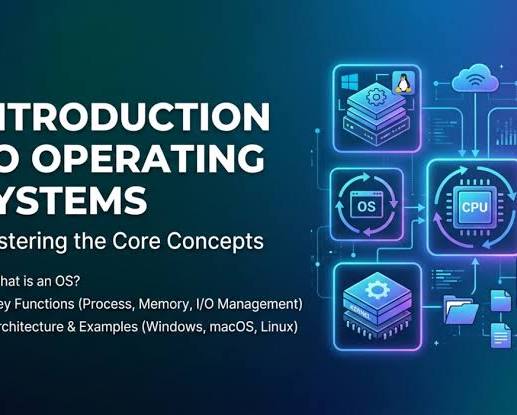
This course introduces learners to the fundamental principles and functions of operating systems. It covers the meaning, evolution, and types of operating systems; basic OS structure, including the kernel and user interface; process, memory, file, and device (I/O) management; user and system administration; and basic operating system security practices. The course also introduces networked, virtualized, and modern operating systems and popular OS platforms (Windows and Linux) and includes hands-on practical labs in OS installation, configuration, and command-line troubleshooting. By the end of the course, learners will be able to operate, configure, and maintain common operating systems in everyday IT environments.
- Teacher: Stephen Maingi
